
by: Lois Fearne
Jul 08, 2026
 
4 min read

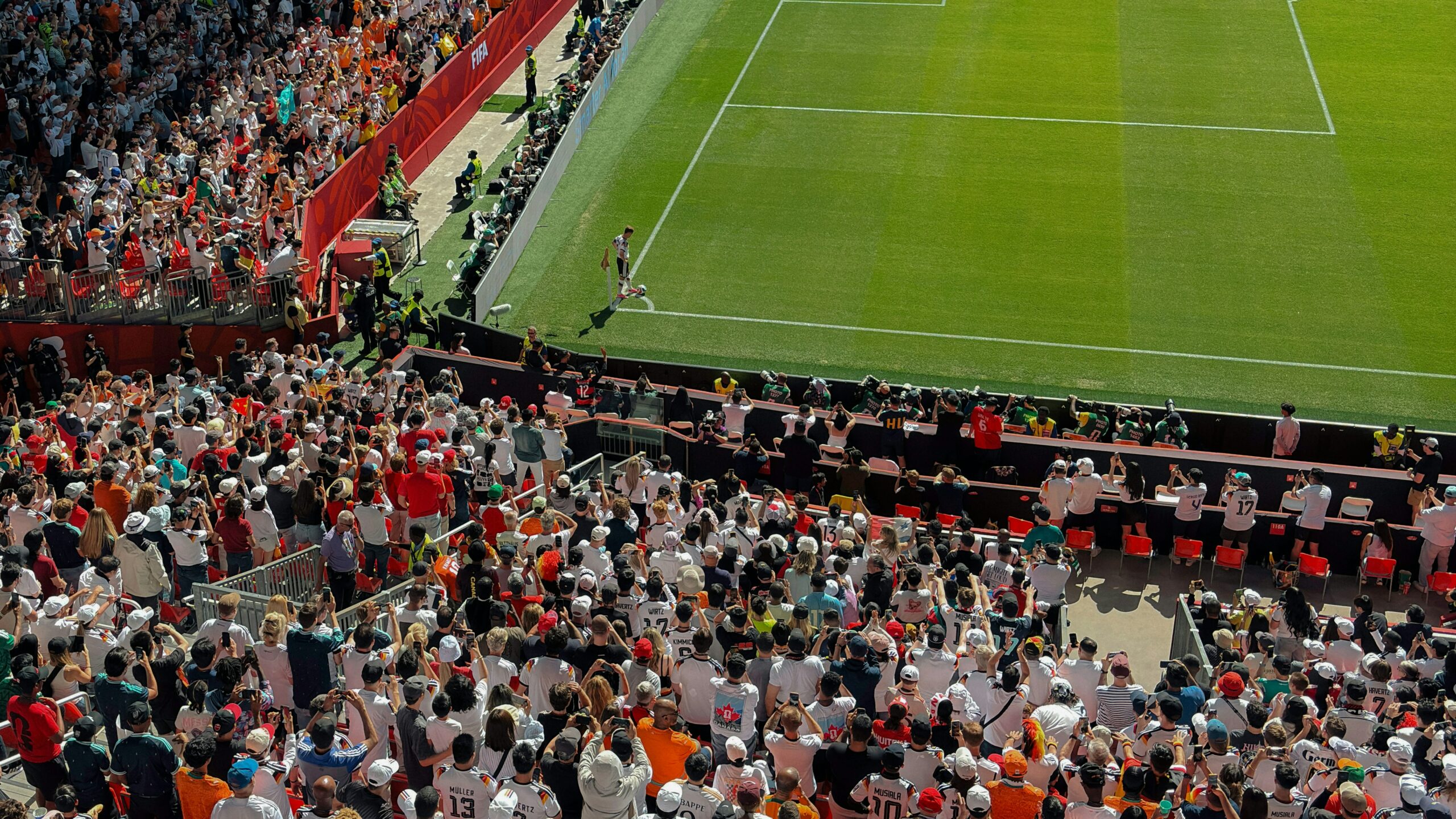
1 in 5 World Cup viewers can’t name a single 2026 World Cup sponsor

From ad-break attention to match-day spending. UK viewers are far more likely to reach for their phones during breaks, while US consumers spend more freely once the game is on.

The World Cup is one of the biggest advertising platforms in the world. So why do so many people forget which brands are advertising?

Every World Cup offers brands the same opportunity: millions of viewers, big sponsorship deals, and prime-time ads. But when the match stops for half-time, something different happens. People pick up their phones.

To find out how much attention sponsors actually get, we asked 1,000 verified World Cup viewers, 500 in the UK and 500 in the US, six straightforward questions about how they watch the World Cup.

We got the results in less than an hour. Let’s take a look.

The sponsorship gap.

For many brands, just being linked to the tournament doesn’t mean people will remember them. When we asked people to name a World Cup sponsor:
  • 20% of UK consumers couldn’t name one at all
  • Only 10% of Americans drew a blank
Among those who could name a sponsor, the top picks were well-known brands.
  • Coca-Cola led the way
  • Adidas followed
  • McDonald’s came next
Surprisingly, AB InBev, even as a major sponsor, was barely mentioned by consumers. This shows that sponsorship alone isn’t enough, brands still need to work to get noticed.

Because during halftime, viewers are somewhere else.

The biggest challenge isn’t remembering the advert. It’s seeing it in the first place. More than half told us they immediately switch their attention elsewhere during breaks.
  • 51% leave the TV on while checking their phone
  • 23% continue watching the adverts
  • 13% scroll social media with the TV muted
  • 11% leave the room altogether
This behaviour varies widely across countries. British viewers are much more likely to do several things at once.
  • 61% of UK viewers reach for their phone
  • compared with 40% in the US

Americans are almost twice as likely to keep watching TV.

Once people start using their phones, their attention splits even more. UK viewers often visit sports news sites like BBC Sport and Sky Sports (33%), while Americans are much more likely to go to YouTube (28%), which is more than twice the UK rate.

The tournament doesn’t just influence attention. It changes spending too.

Watching football changes shopping habits, but this effect is much stronger in the US than in the UK. Americans are significantly more likely to make spontaneous purchases around matches.
  • 26% buy fast food on match day, compared with 16% in the UK
  • 40% stock up on groceries before games, versus 31% of Brits
British households seem much less affected, though late game times might play a role. Almost half (45%) say the tournament has no impact on their grocery spending at all.

Promotions matter, but only to a point.

Brand loyalty also changes during big sporting events. Consumers are more willing to switch brands when a World Cup promotion is running.
40% of Americans would switch to a competing brand offering a tournament promotion compared with 31% in the UK. British shoppers are generally more focused on price. More than a third (36%) would just pick a cheaper supermarket own-brand option.

What happens when the final whistle blows?

For many UK consumers, not much changes.

More than half (52%) expect their spending to stay exactly the same once the tournament finishes. Only 31% of Americans say the same. Instead, a third of US consumers expect their spending to fall back immediately after the final.

The World Cup has a much bigger short-term effect on spending in the US than in Britain.

The bigger story isn’t football.

These findings are interesting because they relate to the World Cup, but they’re useful because they show where people focus their attention.

Consumer behaviour changes quickly. Sometimes week by week. Sometimes day by day. And sometimes by the hour.

If you had started a traditional research project on this topic a month ago, you might still be waiting for the results. By now, the conversation would have already moved on.

All the data in this blog was collected from the OnePulse community in real-time and delivered in less than an hour. That’s the benefit of real-time market research.
When consumer behaviour shifts, your research should keep up.

Ask your questions.

We gathered these insights from 1,000 consumers in less than an hour.

Whether you’re testing a campaign, checking brand recall, or tracking changing consumer behaviour, you shouldn’t have to wait weeks for answers.

Sign up with your work email and send your first survey (Pulse) for free today.

Why wait to hear what your customer is thinking?