

The World Cup has arrived in America. And Americans are into it.
Soccer may not dominate the American sports conversation year-round, but the FIFA World Cup 2026 is shaping up to be a different story. Nearly 9 in 10 Americans told us the tournament feels like a big event where they live.
What’s more, it seems to be living up to the hype, with 3 in 4 rating their experience positively so far. Team USA gave Americans even more to cheer about by opening tournament play with a 4-1 victory over Paraguay. Many came away impressed by the performance, giving Americans even more reason to tune in.
That’s only half the story.
When America hosts, it doesn’t just stage a sporting event. It puts on a show. The opening ceremony brought together Katy Perry, LISA, Tyla, and Future, turning the World Cup into part football tournament, part entertainment spectacle, and very much a cultural moment.
Across the pond, the mood is a little different. For Brits, it all comes down to whether the match is worth losing sleep over. And that decision largely comes down to who’s playing. England and Scotland matches are the ones most likely to justify a late night. Others are happy to see the highlights the next morning.
So, while one side is embracing the show, the other is setting alarms. But both are paying attention. That’s exactly what brands are counting on…
TL;DR
- Americans are embracing FIFA World Cup 2026, both as a sporting event and a cultural moment.
- Adidas won with storytelling, while Nike won with a fast-moving, behind-the-scenes style and even more celebrity power.
- Jeep showed that unusual promotions can still get people talking.
- Levi’s proved you don’t need to be an official sponsor to steal attention.
- Across every campaign, entertainment, humor, and creativity drove the strongest reactions.
- Pink football boots are winning attention, changing perceptions, and influencing.
Here’s what happens when the World Cup meets America’s marketing machine
We ran Pulses on Adidas’ Backyard Legends, Nike’s Rip the Script and Jeep’s World Cup giveaway to see how American consumers reacted. The football may be on the pitch, but there’s a pretty interesting rivalry playing out between the brands too.
Here’s what consumers thought.
Adidas Backyard Legends campaign
Adidas’ Backyard Legends campaign brings together Timothée Chalamet, Lionel Messi, Bad Bunny, Lamine Yamal, Jude Bellingham and Trinity Rodman in a film that blends soccer, celebrity culture and cinematic storytelling. With plenty of visual effects and a few nods to football’s past.
What was the initial reaction to the ad?
This one hit the target. More than 3 in 4 gave the ad a thumbs up, with 44% saying they loved it and another 33% saying they liked it. Only around 13% said they didn’t really connect with it or felt it wasn’t for them.
How did people rate the star-studded cast?
The line-up looked like a dream team on paper, and viewers seemed to agree. More than 8 in 10 rated the cast as strong, including 51% who called it very strong. With football icons, rising stars and celebrity appearances all sharing the screen, the cast proved to be one of the campaign’s strengths.
What did viewers think about the use of AI?
Turns out AI gets a warmer welcome when football legends are involved. Around 62% of viewers reacted positively to Adidas recreating younger versions of football icons, either saying they liked it or found it creative. While some felt it was strange (10%) or didn’t like it (12%), most were happy to go along with the technology when it was used to bring football legends back into the story.
What left the biggest impression?
The story stood out above everything else. Around 31% said the narrative was the most memorable part of the commercial, ahead of the street soccer scenes (24%), soccer stars (23%) and throwback feel (22%). Rather than one standout moment, viewers seemed to connect with a mix of storytelling, football culture and familiar faces.
Future movie?
Viewers found the story so good that they want a sequel. More than 8 in 10 said they would be interested in seeing the concept expanded into a movie, including 41% who said they would be very interested. That’s a strong sign that Adidas built a world viewers wanted to stay in.
Adidas wanted to tell a story. Americans believe it succeeded. The cast drew praise, the AI recreations sparked curiosity, and the football culture gave the film heart. But the real winner was the storytelling. With its stylish visuals, larger-than-life characters and cinematic chaos, Backyard Legends felt less like a commercial and more like the opening chapter of a film. Think Marty Supreme meets street football.
Nike Rip the Script campaign
Nike’s Rip the Script campaign throws football into a whirlwind of movie sets, gaming worlds, social media moments and BIG celebrity appearances. Featuring stars including Kylian Mbappé, Vinícius Júnior, Erling Haaland and Cristiano Ronaldo alongside Kim Kardashian, Travis Scott and Ted Lasso, the film leans heavily into star power, speed and digital culture.
What was the initial reaction to the ad?
Consumer reactions were even stronger. More than 3 in 4 reacted positively, including 54% who said they loved it and 22% who liked it. Just 13% said they didn’t connect with it or felt it wasn’t for them.
How did viewers rate the line-up?
Nike’s cast looked almost impossible to top, and viewers certainly didn’t think it fell short. More than 8 in 10 rated the line-up as strong, including 62% who called it very strong. That’s an even stronger rating than Adidas’ star-studded cast, suggesting Nike’s mix of football icons and celebrity cameos packed serious pulling power.
How did viewers describe the creative style?
There wasn’t one single word for it. Viewers were most likely to describe the advert as fast-paced and exciting (27%), closely followed by creative and unexpected (24%) and chaotic but fun (21%). While 19% felt there was a bit too much going on, the overall picture is of a campaign that embraced the chaos and largely got away with it.
What was the reaction to the digital-first visual style?
All the rapid cuts, visual effects and internet-era references proved to be a winning combination. Nearly 8 in 10 viewers said they loved or liked the visual style, while only a small minority found it overwhelming or didn’t enjoy it. For most, the constant stream of scenes, references and visual effects added to the experience rather than distracting from it.
Nike wasn’t interested in subtlety. It threw everything at the screen, and it worked. If Adidas felt like the stylish chaos of an A24 film, Nike brought a more raw, backstage energy. It felt like a football film handed to the internet and told to have fun.
Jeep goes all in on George Washington and Team US
It’s not every day a promotion starts with George Washington. Jeep is offering up to 100 free 2026 Wranglers to Americans legally named George Washington, but only if Team USA wins the World Cup.
What was the first reaction to the giveaway?
Most people got the joke. Around 33% described the idea as clever and 28% said it was funny. Others were less convinced, with 19% calling it unrealistic and 17% feeling Jeep was trying too hard.
Does making it almost impossible make it more memorable?
That seems to be the trade-off. Some people felt the George Washington requirement and Team USA challenge made the giveaway more memorable (19%) or funnier (17%). Others thought it made the promotion feel unrealistic (23%) or like a publicity stunt (23%). The odds may have been long, but they were also hard to forget.
How did the giveaway make Jeep look?
The campaign gave Jeep a chance to show a different side of itself. Americans were most likely to see Jeep as a brand designed to get noticed (21%), while others described it as more fun (18%), more creative (17%) and more patriotic (17%). The promotion may not have transformed perceptions overnight, but it certainly made Jeep feel less predictable.
Would this get sent to the group chat?
Not necessarily. Around 47% said they would be very or somewhat likely to send the giveaway to a friend, while 53% said they probably wouldn’t. The split suggests the campaign was intriguing enough to get people talking, even if not everyone felt the need to hit share.
Jeep’s unusual giveaway landed more positively than negatively. Most people saw the humor in the idea, even if they weren’t convinced by the odds.
FIFA removed the logo, Levi’s owned it
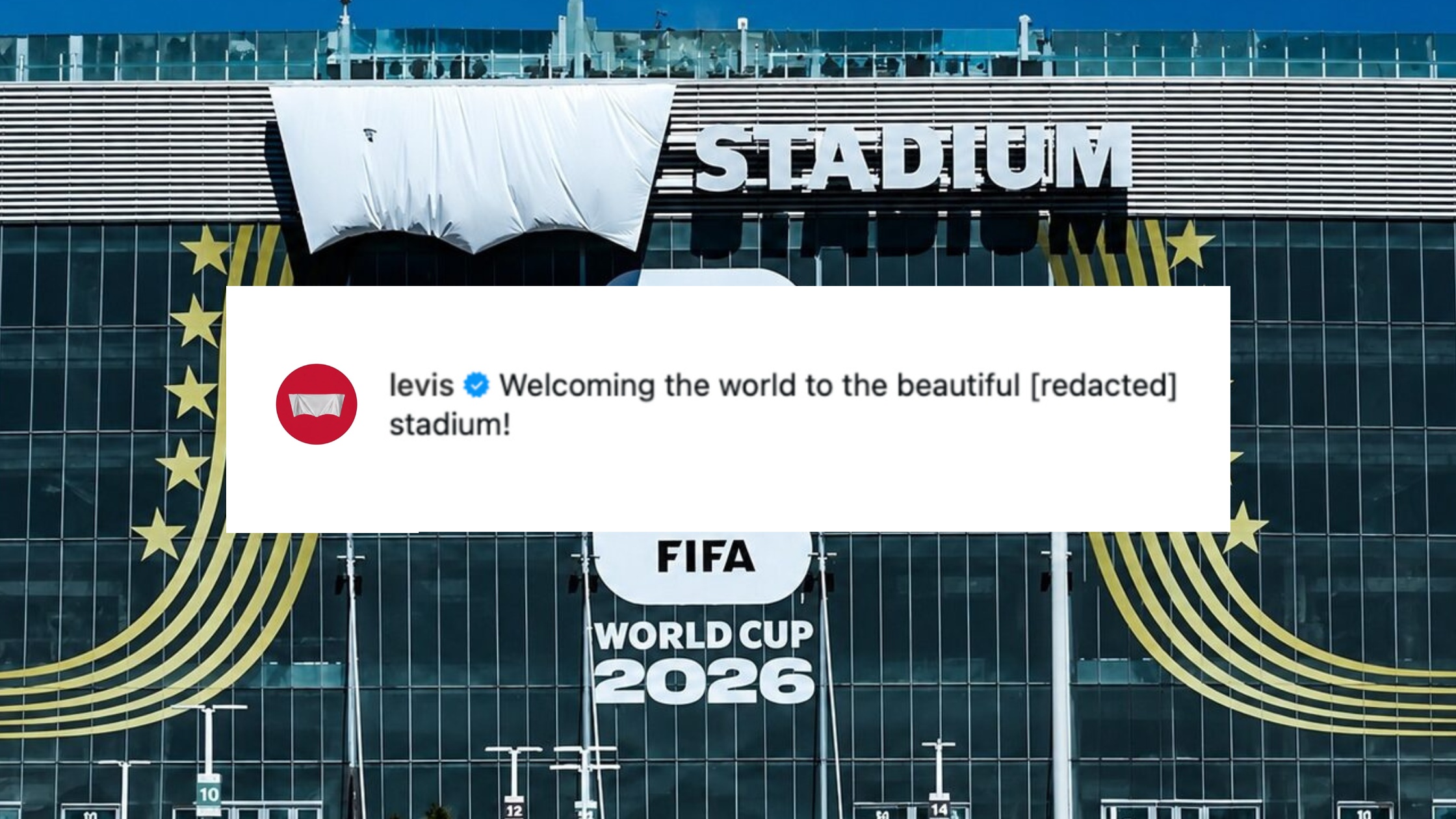
FIFA told Levi’s to cover its logo at Levi’s Stadium. Rather than complain, Levi’s leaned into the absurdity, removing its logo from social media too and turning the whole situation into a joke.
How did Americans respond when Levi’s removed its logo?
They laughed. Nearly 9 in 10 Americans found Levi’s response funny, with 45% calling it very funny and another 44% saying it was somewhat funny. For most, the brand’s decision to play along with the situation made the whole thing even more entertaining.
Did removing the logo create more attention?
Ironically, yes. Almost 9 in 10 believed Levi’s got more attention by removing its branding than it would have by leaving it visible. Nearly 58% said definitely, while another 31% said probably.
How else did the stunt help Levi’s?
It didn’t just make people laugh. It was good for the brand too. Around 54% said the stunt left them with a more favorable impression of Levi’s, while 43% said it didn’t change their opinion either way.
FIFA vs. Levi’s, who won the situation?
Americans handed the win to Levi’s (65% compared with 35% for FIFA).
Some brands might see a logo takedown as an own goal. Levi’s saw an opening. Consumers enjoyed the joke, and in a tournament where brands are fighting to be seen, Levi’s stood out by disappearing.
Get feedback on your next campaign, sponsorship, or partnership in around 10 minutes.
Send your first survey for free, or book a demo for an extended trial, and we’ll set you up for a no-strings-attached trial.