

Why real human responses still matter in research
AI can predict what people might say. The real question is how often you still need to ask them anyway. At OnePulse, real people keep the research current, and AI helps us make more of what they tell us.
The one thing we won’t let AI do
AI has already changed market research, and it’s moving fast. Models can now predict how certain groups of people are likely to answer a question without a researcher going out to ask every time. That’s useful. In some cases, it may be all you need.
But those models are built on the past. They learn from what people have already said and done, not from what people are saying right now. People change their minds. Opinions shift overnight. A word that meant one thing last year can mean something else today. The most valuable thing you learn from research is sometimes the thing nobody predicted. That’s why there’s one thing we won’t hand over to AI: the final word, when it actually matters.
At OnePulse, we typically get 500 real responses in about ten minutes. That changes the math. If you can hear from real people that fast, speed stops being a reason to lean on a prediction instead. Real people are the whole point.
Cam, our CTO, and I have spent eleven years building OnePulse around one idea: ask real people what they think, right now, and make it easy for them to answer. That still matters to me.
A person answering today knows what today feels like. Someone might love something you expected them to hate, misread the question entirely, or admit they’ve never thought about it before. None of that is noise. It’s often the most useful data in the study, because a model trained on the past can’t manufacture a genuine surprise.
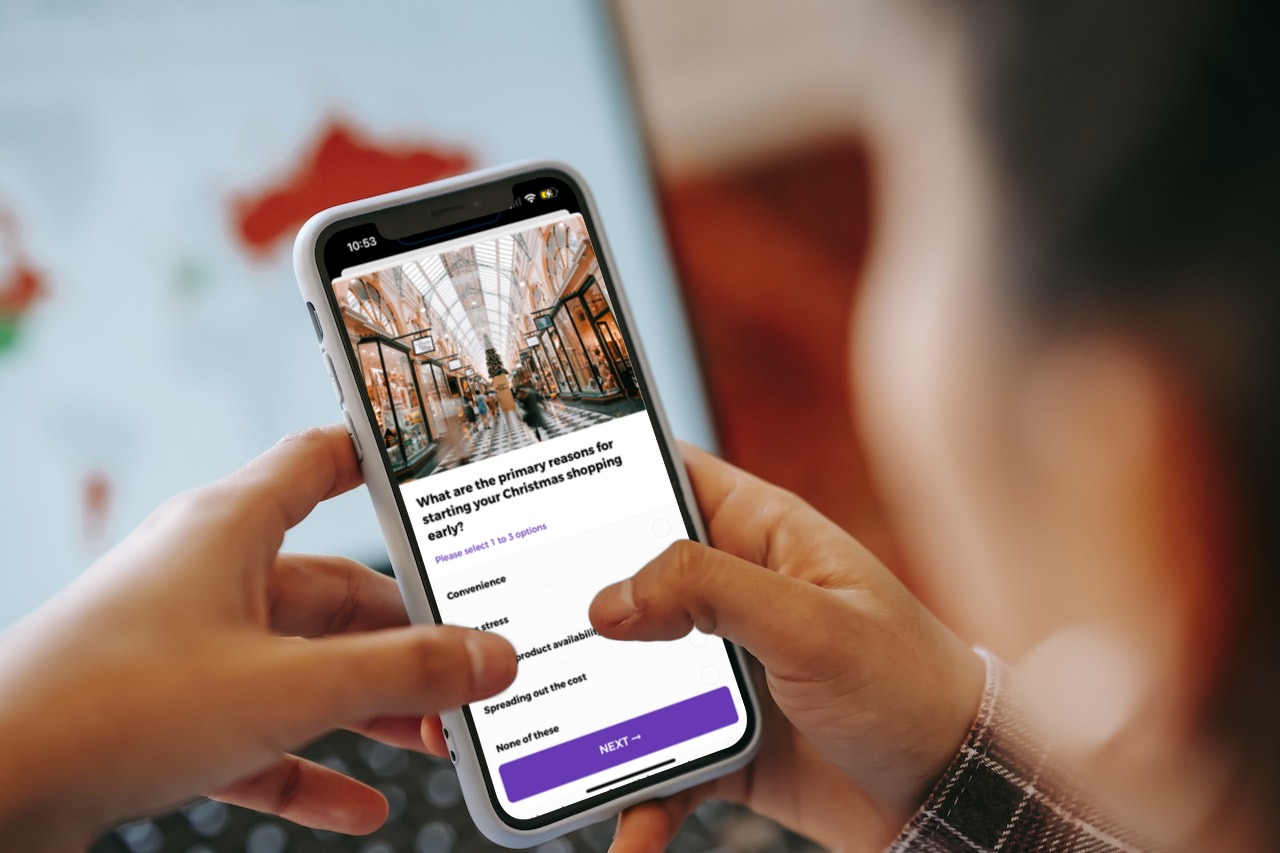
It’s also why I care about the experience of the people answering Pulses. We’ve built a dedicated mobile app to make participating in research quick and easy, because people only keep showing up if the experience respects their time.
The shortcut that worries me
Synthetic respondents are becoming a real part of market research, using past research and other data to predict how different types of people are likely to respond to a new question. There’s clearly value in that, especially early on, when you need a fast read before spending a client’s budget on a full study.
What worries me is treating a synthetic answer as a finished one. Synthetic models are only as current as the data behind them. However good a model gets at reproducing that data, reality can move faster than what it learned from, and the drift is invisible until you check a prediction against a live answer. The world doesn’t sit still.
People move first. The model catches up later. That’s why a live check matters more, not less, as synthetic responses get better: the better a model gets at predicting yesterday, the easier it is to assume it still reflects today.
Where AI earns its place
We already use AI throughout OnePulse, and I expect we’ll use a lot more of it. Inside OnePulse, AI can go back through a client’s previous research, connect an answer today with something they learned six months ago, work through thousands of open text responses, and spot patterns a team might miss. It can also get a first draft of a report onto the page much faster.
That’s where I think AI earns its keep: doing the slow work, surfacing what’s buried in the data, and making research a client has already paid for more useful. Predicting an answer before we ask is one more tool in that kit.
AI can also help predict how an audience might respond before we ask them. Sometimes that prediction is enough, and we move on. But when something raises the stakes, a product launch, a price change, a moment where a brand’s reputation is on the line, a prediction isn’t something I’m willing to bet on alone. That’s when I want to go back to real people and find out.
What this means for OnePulse
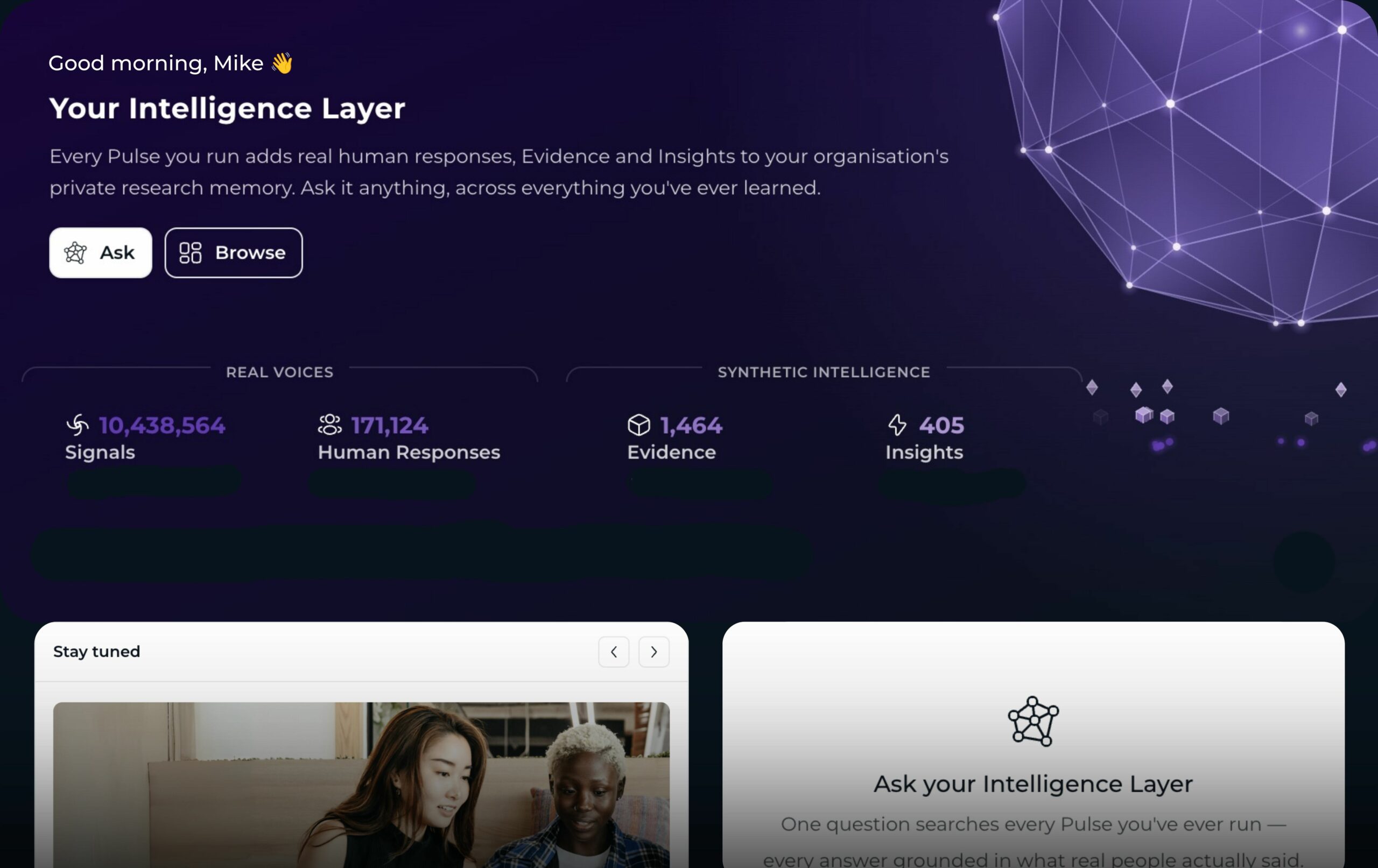
This thinking sits behind the private Intelligence Layer we’re building into OnePulse. Every Pulse a client runs adds to their own private base of real responses. Instead of research disappearing into a spreadsheet or a slide deck, AI can connect it with everything else that client has already learned.
Over time, that should mean asking fewer new questions, not because the answers stop mattering, but because a client’s own history of real answers becomes something AI can draw on directly. That’s different from asking a general-purpose model to simulate an audience from broad training data. It’s the client’s own people, captured at the moment they actually said it. AI can surface that history, make sense of it, and increasingly predict from it. When something changes in a way a client can’t afford to guess about, we go back and ask real people again. Those new answers become part of what the system knows next time.
That’s where I think research is heading. We’ll get more out of the answers people have already given us, ask something new only when we genuinely need to, and use AI to connect the two.
Real people keep the research current. AI helps us make more of what they tell us.
If you want to see what that looks like, our Intelligence Layer is already live with an early group of clients, with a full launch in October.
Related posts